Lion Gate-Naval Dockyard Viewpoint

About

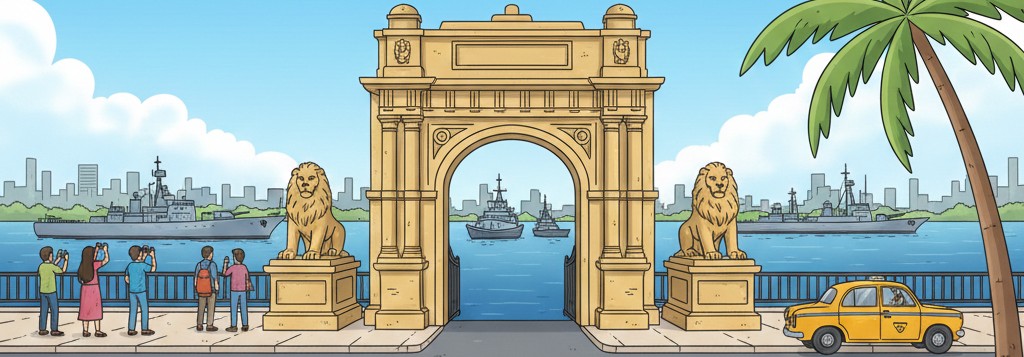
Lion Gate / Naval Dockyard Viewpoint, Mumbai is a historically significant gateway that marks the primary entrance to the Indian Navy’s Naval Dockyard in the Fort area of South Mumbai. This gate stands as a reminder of Mumbai’s deep-rooted maritime and naval legacy that dates back to the British colonial period. Originally developed as part of the Bombay Dockyard, the area played a crucial role in shipbuilding, repair, and naval operations that supported colonial trade and defence.

After India’s independence, the dockyard expanded to become a key operational base of the Indian Navy, reinforcing the strategic importance of the site. Although the dockyard itself remains a restricted defence establishment, the Lion Gate is clearly visible from the public road and is often included in heritage walks. The site is appreciated more for its historical symbolism and architectural presence than for conventional sightseeing.

  • ๐Ÿ›๏ธ Historic entrance to the Indian Navy’s Naval Dockyard
  • โš“ Origins linked to the British-era Bombay Dockyard
  • ๐Ÿšซ Dockyard interior is strictly restricted to civilians
  • ๐Ÿ“ Located in the Fort heritage district of South Mumbai
  • ๐Ÿ“ท Popular stop during heritage walks and photography tours

Lion Gate-Naval Dockyard Viewpoint

History & Naval Heritage โš“๐Ÿ›๏ธ

The history of Lion Gate / Naval Dockyard Viewpoint, Mumbai is closely linked to the development of Mumbai as a major maritime and naval centre during the British colonial era. The Naval Dockyard traces its origins to the 18th and 19th centuries, when the British established the Bombay Dockyard to support shipbuilding, repairs, and naval logistics for trade and defence in the Arabian Sea. Lion Gate emerged as one of the prominent access points marking this strategically important zone.

Over time, the dockyard became a backbone of maritime operations in western India. Following India’s independence in 1947, the facility was taken over and expanded by the Indian Navy, transforming it into a modern naval base while retaining its historic structures. Today, Lion Gate stands as a symbolic reminder of colonial maritime history and India’s evolving naval strength. Though public entry is restricted, the gate continues to represent the continuity of naval heritage in South Mumbai.

  • โš“ Origins in the British-era Bombay Dockyard
  • ๐Ÿ›๏ธ Linked to colonial shipbuilding and maritime trade
  • ๐Ÿ‡ฎ๐Ÿ‡ณ Expanded under the Indian Navy after independence
  • ๐Ÿงญ Strategic role in western India’s naval operations
  • ๐Ÿ™๏ธ Part of Mumbai’s Fort heritage district legacy


Architecture & Design ๐Ÿงฑ๐Ÿ›๏ธ

The architectural design of Lion Gate / Naval Dockyard Viewpoint, Mumbai reflects the functional yet imposing style of British-era military construction. Built as a secure gateway to the Naval Dockyard, the structure emphasises strength, symmetry, and durability rather than ornamentation. The solid masonry form and balanced proportions were intended to convey authority while ensuring controlled access to a strategically sensitive area.

A defining feature of the Lion Gate is its association with the lion, a traditional symbol of power, vigilance, and protection. These lion motifs contribute to the identity of the gate and distinguish it as a landmark within the Fort precinct. The overall design aligns with colonial military architecture seen across Mumbai, where practicality was combined with symbolic elements. Even today, the gate’s robust appearance reinforces its continued role as an active naval entrance. 

  • ๐Ÿงฑ Solid masonry construction for durability and defence
  • ๐Ÿ›๏ธ Influence of colonial military architecture
  • โš–๏ธ Emphasis on symmetry and controlled access
  • ๐Ÿฆ Lion motifs symbolising power and protection
  • ๐Ÿ™๏ธ Visual landmark within the Fort heritage district


Visitor Experience & Viewpoint ๐Ÿ“ท๐Ÿšถ

The visitor experience at Lion Gate / Naval Dockyard Viewpoint, Mumbai is defined by observation rather than exploration. As the Naval Dockyard is an active and restricted defence zone, civilians are not permitted to enter the premises. Visitors can, however, view the historic Lion Gate from the public road outside the dockyard, making it an important visual landmark within the Fort area.

The viewpoint is especially popular among heritage walk groups, history enthusiasts, and photographers interested in Mumbai’s colonial and naval past. The gate’s imposing structure and surrounding urban setting offer good opportunities for contextual photography, particularly during daylight hours. While there are no on-site facilities or interpretation boards, the site gains value when combined with nearby heritage locations such as Horniman Circle and Kala Ghoda. Visitors should approach the site with respect for security restrictions.

  • ๐Ÿ‘€ External viewing only from public access roads
  • ๐Ÿ“ท Suitable for heritage and architectural photography
  • ๐Ÿšถ Common stop during Fort and Kala Ghoda heritage walks
  • ๐Ÿšซ No entry into the Naval Dockyard premises
  • ๐Ÿ™๏ธ Best experienced as part of a broader South Mumbai exploration
Safety & Security Guidelines ๐Ÿšซ๐Ÿ›ก๏ธ

Safety and security are critical aspects when visiting Lion Gate / Naval Dockyard Viewpoint, Mumbai, as the site is located next to an active Indian Navy defence establishment. The Naval Dockyard operates under strict security protocols, and civilian access is limited to public areas outside the gate. Visitors must not attempt to cross barriers, approach security personnel unnecessarily, or seek entry into restricted zones.

Photography should be done cautiously and only from permitted public viewpoints. Capturing images of security installations, personnel, or sensitive areas is not allowed and may attract attention from authorities.

Visitors are advised to remain respectful, avoid prolonged loitering, and follow instructions if approached by security staff. The area is best visited during daytime hours, preferably as part of an organised heritage walk or guided city exploration.

  • ๐Ÿšซ No entry beyond public access points
  • ๐Ÿ“ท Avoid photographing security personnel or installations
  • ๐Ÿ›ก๏ธ Follow instructions issued by naval or security staff
  • ๐Ÿšถ Do not loiter or block access roads
  • ๐Ÿ•˜ Prefer visiting during daytime hours


Best Time to Visit ๐ŸŒค๏ธ๐Ÿ•˜

The best time to visit Lion Gate / Naval Dockyard Viewpoint, Mumbai is during the cooler and drier months, typically from November to February, when weather conditions are comfortable for walking and outdoor exploration in South Mumbai. As the site is viewed externally and involves short stops rather than extended visits, pleasant weather significantly enhances the experience.

Visiting during daytime hours is strongly recommended, both for better visibility and adherence to security norms. Early mornings and late afternoons offer softer natural light, making them ideal for photography and heritage walks.

Weekdays are generally quieter compared to weekends, as the surrounding Fort area experiences less pedestrian traffic. Monsoon months may limit photography and comfort due to rain and humidity.

  • ๐ŸŒค๏ธ November to February for pleasant weather
  • ๐Ÿ•˜ Visit during daytime hours only
  • ๐Ÿ“ท Early morning or late afternoon for photography
  • ๐Ÿšถ Weekdays preferred for fewer crowds
  • ๐ŸŒง๏ธ Avoid monsoon months for comfort


Tips & Hacks for Visitors ๐Ÿ’ก๐Ÿšถ

Visiting Lion Gate / Naval Dockyard Viewpoint, Mumbai requires a mindful approach due to its proximity to an active naval facility. Planning your visit as part of a broader Fort or Kala Ghoda walk helps maximise the experience, as the site itself is best enjoyed as a brief stop rather than a standalone destination. Carrying basic information about the landmark can add context, as there are no on-site display boards or guides.

Comfortable walking shoes are recommended, especially if you are covering multiple heritage spots in South Mumbai. Visitors should keep visits short, respect security boundaries, and avoid unnecessary attention.

For photography enthusiasts, using a simple camera or mobile phone without extended equipment helps prevent security concerns. Staying aware of surroundings and local instructions ensures a smooth and respectful visit.

  • ๐Ÿ’ก Combine the visit with Fort or Kala Ghoda heritage walks
  • ๐Ÿ‘Ÿ Wear comfortable shoes for walking tours
  • ๐Ÿ“š Read up on the site beforehand for better context
  • ๐Ÿ“ท Keep photography simple and discreet
  • ๐Ÿšซ Avoid prolonged stops near security zones
Tips & Hacks for Visitors ๐Ÿ’ก๐Ÿšถ

Visiting Lion Gate / Naval Dockyard Viewpoint, Mumbai requires a mindful approach due to its proximity to an active naval facility. Planning your visit as part of a broader Fort or Kala Ghoda walk helps maximise the experience, as the site itself is best enjoyed as a brief stop rather than a standalone destination. Carrying basic information about the landmark can add context, as there are no on-site display boards or guides.

Comfortable walking shoes are recommended, especially if you are covering multiple heritage spots in South Mumbai. Visitors should keep visits short, respect security boundaries, and avoid unnecessary attention.

For photography enthusiasts, using a simple camera or mobile phone without extended equipment helps prevent security concerns. Staying aware of surroundings and local instructions ensures a smooth and respectful visit.

  • ๐Ÿ’ก Combine the visit with Fort or Kala Ghoda heritage walks
  • ๐Ÿ‘Ÿ Wear comfortable shoes for walking tours
  • ๐Ÿ“š Read up on the site beforehand for better context
  • ๐Ÿ“ท Keep photography simple and discreet
  • ๐Ÿšซ Avoid prolonged stops near security zones


Restricted Area Status ๐Ÿšซโš“

The current status of Lion Gate / Naval Dockyard Viewpoint, Mumbai remains that of an active and highly restricted defence zone under the control of the Indian Navy. The Naval Dockyard continues to function as an operational base, supporting naval maintenance, logistics, and strategic activities. As a result, public access is strictly limited to viewing the gate from designated public roads outside the dockyard boundary.

There are no announced plans for public entry, guided tours, or conversion into a museum space. Security presence in the area is constant, and regulations may be enforced without prior notice depending on operational requirements.

Visitors should treat the site as a symbolic and visual landmark rather than a tourist attraction. Its relevance today lies in its continued operational importance and its role as a reminder of Mumbai’s enduring naval heritage.

  • ๐Ÿšซ Active and restricted Indian Navy facility
  • โš“ Dockyard remains fully operational
  • ๐Ÿ‘€ Public access limited to external viewing only
  • ๐Ÿ›ก๏ธ Continuous security presence
  • ๐Ÿ›๏ธ Functions as a symbolic heritage landmark, not a public site


How to Reach ๐ŸšŒ๐Ÿš‡

Reaching Lion Gate / Naval Dockyard Viewpoint, Mumbai is convenient due to its location in the well-connected Fort area of South Mumbai. The site lies close to major railway stations, bus routes, and heritage precincts, making it easy to include in a city walk or short visit. As public access is limited to external viewing, visitors only need to reach the nearby public road outside the Naval Dockyard gate.

  • By Air โœˆ๏ธ
    Chhatrapati Shivaji Maharaj International Airport is approximately 25–27 km away. Taxis and app-based cabs are the most convenient option, with approximate fares ranging from โ‚น500 to โ‚น900, depending on traffic and time of day.

  • By Train ๐Ÿš†
    The nearest railway stations are Chhatrapati Shivaji Maharaj Terminus (CSMT) and Churchgate. From either station, the gate is around 1–2 km away and can be reached by walking, taxi, or local bus. Auto-rickshaws are not permitted in this part of South Mumbai.

  • By Bus / Road ๐ŸšŒ๐Ÿš—
    Several BEST buses operate through the Fort and Horniman Circle area. Taxis and private vehicles can drop visitors nearby, but parking options are limited and short stops are advised due to security sensitivity.

Travel Tips:

  • ๐Ÿ•˜ Visit during daytime hours for smooth access
  • ๐Ÿšถ Walking is ideal if exploring Fort heritage sites
  • ๐Ÿš— Avoid long parking near the gate
Food Options / Food Courts Nearby ๐Ÿฝ๏ธ

Food options near Lion Gate / Naval Dockyard Viewpoint, Mumbai are best explored in the surrounding Fort, Horniman Circle, and Kala Ghoda areas, which are known for their historic cafés, budget eateries, and well-established restaurants. Since the dockyard itself has no public facilities, visitors usually plan meals before or after their short stop at the viewpoint.

The nearby local eateries cater to all budgets, from affordable snacks and South Indian meals to mid-range cafés offering Indian and continental dishes.

Both vegetarian and non-vegetarian options are easily available, making the area suitable for quick bites as well as relaxed meals during heritage walks.

  • ๐Ÿฝ๏ธ Local cafés and restaurants around Horniman Circle
  • ๐Ÿฅ— Pure vegetarian and mixed-menu eateries in Fort area
  • ๐Ÿ› Non-vegetarian options including Indian and continental cuisine
  • ๐Ÿ’ฐ Budget range: โ‚น80–โ‚น150 for snacks and quick meals
  • ๐Ÿ’ฐ Mid-range dining: โ‚น250–โ‚น600 per person
  • โญ Must-try items: South Indian meals, sandwiches, coffee, bakery snacks


Places Nearby Lion Gate-Naval Dockyard Viewpoint
Frequently Asked Questions
Q1: What is Lion Gate / Naval Dockyard Viewpoint, Mumbai known for?
A1: Lion Gate / Naval Dockyard Viewpoint, Mumbai is known as the historic entrance to the Indian Navyโ€™s Naval Dockyard and is valued for its colonial-era naval heritage and symbolic importance in South Mumbai.
Q2: Where is Lion Gate / Naval Dockyard Viewpoint, Mumbai located?
A2: Lion Gate / Naval Dockyard Viewpoint, Mumbai is located in the Fort area of South Mumbai, near Horniman Circle, within the historic Fort heritage district.
Q3: Is public entry allowed at Lion Gate / Naval Dockyard Viewpoint, Mumbai?
A3: Public entry is not allowed inside the dockyard at Lion Gate / Naval Dockyard Viewpoint, Mumbai. Visitors can only view the gate externally from designated public roads.
Q4: Why is Lion Gate / Naval Dockyard Viewpoint, Mumbai restricted?
A4: Lion Gate / Naval Dockyard Viewpoint, Mumbai is restricted because it forms part of an active Indian Navy defence establishment with ongoing operational and security requirements.
Q5: Can tourists take photographs at Lion Gate / Naval Dockyard Viewpoint, Mumbai?
A5: Tourists may take photographs of Lion Gate / Naval Dockyard Viewpoint, Mumbai only from public viewpoints, while avoiding security personnel, installations, and sensitive areas.
Q6: What is the historical importance of Lion Gate / Naval Dockyard Viewpoint, Mumbai?
A6: Lion Gate / Naval Dockyard Viewpoint, Mumbai represents Mumbaiโ€™s colonial maritime history and its transition into a major naval base after Indiaโ€™s independence.
Q7: Is Lion Gate / Naval Dockyard Viewpoint, Mumbai part of heritage walks?
A7: Yes, Lion Gate / Naval Dockyard Viewpoint, Mumbai is commonly included in Fort and Kala Ghoda heritage walks as an external landmark.
Q8: What is the best time to visit Lion Gate / Naval Dockyard Viewpoint, Mumbai?
A8: The best time to visit Lion Gate / Naval Dockyard Viewpoint, Mumbai is during daylight hours between November and February for comfortable weather and better visibility.
Q9: How much time is required to visit Lion Gate / Naval Dockyard Viewpoint, Mumbai?
A9: A visit to Lion Gate / Naval Dockyard Viewpoint, Mumbai usually takes only 10 to 15 minutes, as it is an external viewing stop.
Q10: Are there any facilities available at Lion Gate / Naval Dockyard Viewpoint, Mumbai?
A10: There are no public facilities at Lion Gate / Naval Dockyard Viewpoint, Mumbai, as it is located next to a restricted naval zone.
Q11: How can one reach Lion Gate / Naval Dockyard Viewpoint, Mumbai by train?
A11: Lion Gate / Naval Dockyard Viewpoint, Mumbai can be reached from Chhatrapati Shivaji Maharaj Terminus or Churchgate railway stations, both located within 1 to 2 km.
Q12: Is Lion Gate / Naval Dockyard Viewpoint, Mumbai suitable for families?
A12: Lion Gate / Naval Dockyard Viewpoint, Mumbai is suitable for families as a brief heritage stop, provided visitors follow safety and security guidelines.
Q13: Are guided tours available at Lion Gate / Naval Dockyard Viewpoint, Mumbai?
A13: There are no official guided tours inside Lion Gate / Naval Dockyard Viewpoint, Mumbai, but it is often explained during external heritage walks.
Q14: What nearby attractions can be combined with Lion Gate / Naval Dockyard Viewpoint, Mumbai?
A14: Lion Gate / Naval Dockyard Viewpoint, Mumbai can be combined with Horniman Circle, Kala Ghoda Art Precinct, Flora Fountain, and other Fort heritage landmarks.
Q15: Is Lion Gate / Naval Dockyard Viewpoint, Mumbai worth visiting?
A15: Lion Gate / Naval Dockyard Viewpoint, Mumbai is worth visiting for those interested in naval history and colonial heritage, especially as part of a broader South Mumbai exploration.